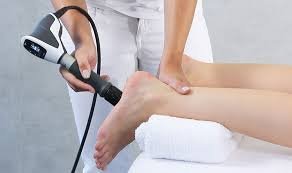
Chronic pain rarely has a single fix, which is why people living with it tend to build a toolkit: movement, hands-on care, lifestyle changes, and supportive therapies. Red light therapy has earned a place in that toolkit for many patients as a non-invasive option that may help support the body's own repair processes. Here's what it is, what the research suggests, and what to realistically expect.
What is red light therapy?
Red light therapy, also called low-level light therapy or photobiomodulation, uses specific wavelengths of red and near-infrared light delivered at low intensity. Unlike the lasers used in surgery, these devices don't cut or heat tissue. The light penetrates the skin and is absorbed by cells in the underlying tissue, where it appears to interact with the energy-producing structures inside them.
What the research suggests
Photobiomodulation has been studied for several decades, and while questions remain about optimal protocols, research suggests a few consistent themes. Studies indicate that absorbed light may support mitochondrial function (the cellular machinery that produces energy), which in turn may help tissues carry out repair processes more efficiently. Research also suggests red and near-infrared light may promote local circulation and may help modulate inflammation, both of which are relevant to chronic pain.
Keep expectations grounded, though. Findings vary across studies, responses vary across individuals, and red light therapy is not a replacement for diagnosing and treating the underlying cause of pain. It's best understood as a supportive therapy that may reduce discomfort and assist healing, not a cure.
What a session is like
If you've never tried it, the experience is uneventful in the best way. Sessions are painless and non-invasive. Most people feel gentle warmth at most, and some feel nothing at all. A treatment typically lasts a matter of minutes, requires no downtime, and fits easily before or after an adjustment or rehab session. There are no needles, no medication, and nothing to recover from afterward, which is part of why many patients find it an easy therapy to stay consistent with.
Red light therapy is one of several supportive therapies we offer in-house. Explore our full lineup, from chiropractic and decompression to wellness therapies, on our services page.
Conditions it's commonly used for
In practice, red light therapy is most often used alongside care for chronic neck and back pain, joint discomfort such as knees and shoulders, tendon and soft-tissue irritation, muscle soreness, and arthritis-related stiffness. Patients dealing with desk-related aches (the kind we discuss in our post on whether sitting too much or poor posture can cause pain) sometimes find it a useful complement to posture work and movement, since light therapy may ease symptoms while the underlying habits get corrected.
Part of a plan, not the whole plan
The most reliable results we see come when red light therapy supports a broader, individualized plan rather than standing alone. At Physical Medicine Health Center, that plan starts with an evaluation: a full history, a movement exam, and in-house X-rays when indicated. That way we know what's actually driving your pain before recommending anything. From there, light therapy may be layered with chiropractic care, rehabilitation exercise, or other services where it makes sense, and skipped where it doesn't. If you're managing a medical condition or are under a physician's care, talk with your provider before adding any new therapy, and never stop a prescribed treatment in favor of one.
Key takeaway: Red light therapy is a painless, non-invasive option that research suggests may support cellular energy production, circulation, and inflammation modulation. It tends to work best as one component of an individualized care plan, not as a standalone fix.