Neck pain that travels into the shoulder, arm, or hand often points back to a disc in the cervical spine. If you've been researching non-surgical options, you've probably come across cervical decompression. Here's a plain-English look at what it is, what a session is actually like, and how we decide whether it fits your case at our Tampa clinic.
What cervical decompression is
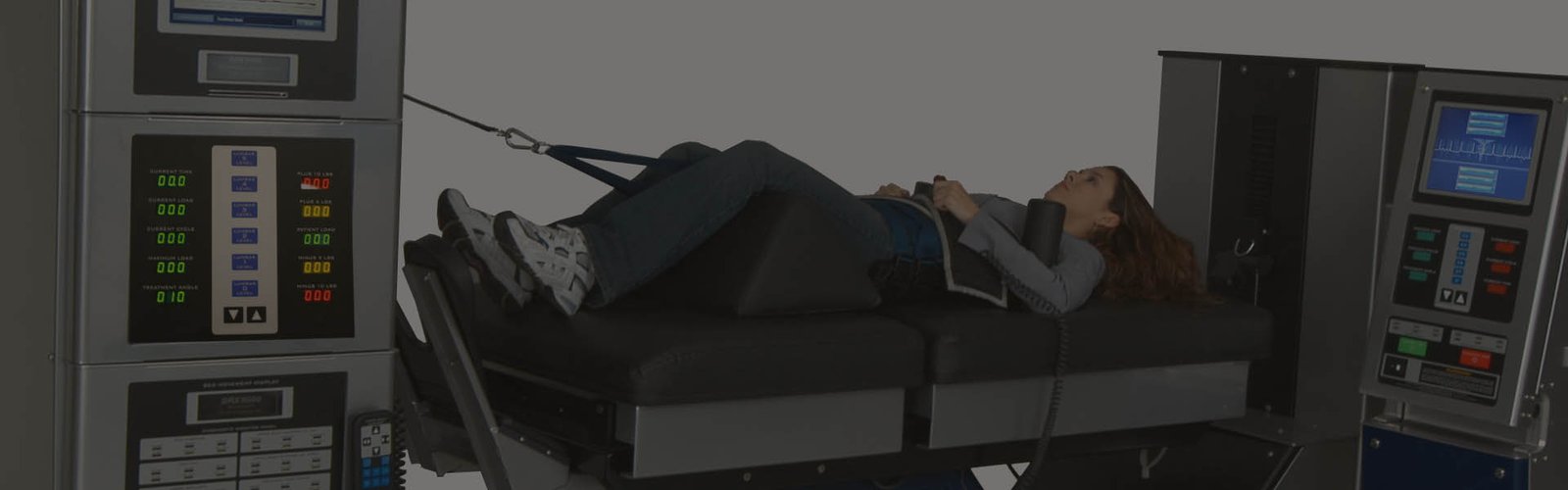
Cervical decompression is a non-surgical, computer-controlled form of traction applied to the neck. At Physical Medicine Health Center we use the DRX9000, an FDA-cleared decompression device. It's worth being precise here: the clearance applies to the device itself, not to a promise of results for any particular diagnosis. The same family of decompression we describe for the low back in our post on what to expect during spinal decompression can be set up to target the cervical spine instead.
How it works
Rather than a steady, continuous pull, the system applies gentle, cyclical traction: it eases the neck into a stretch, releases, and repeats in a slow rhythm the computer controls. That on-and-off pattern is designed to work beneath the body's natural guarding reflex, so the targeted level can open slightly instead of the muscles tightening to resist. The goal is to reduce pressure within the disc space. Reducing that pressure may help take load off irritated structures and support the movement of fluid and nutrients in the area. Results vary from person to person.
What a session feels like
You stay fully clothed and lie comfortably on your back, with a cradle supporting your head and neck rather than anything pulling on your jaw. The doctor enters your treatment settings, and the table begins its slow cycles. Most people describe it as a mild, rhythmic stretch at the base of the skull and neck, noticeable but not painful, and it's common to relax completely during the session. A typical visit runs about 30 minutes, and you can drive yourself home and carry on with your day. If anything ever feels off, a patient-held safety switch stops the session right away.
Decompression is one tool, not the whole plan. Most neck patients pair it with chiropractic care, soft-tissue work, and specific activity changes. You can see how the pieces fit together on our services page.
What it's used for
Cervical decompression is most often considered for disc-related neck problems: herniations, bulges, and degenerative disc changes, including cases where symptoms radiate into the arm. It isn't a fit for every kind of neck pain, and an evaluation is what tells us whether it makes sense for you. If your main complaint is headaches that seem to start in the neck, our post on the connection between neck problems and headaches is a useful companion read.
Are you a candidate?
Some situations call for a different approach, including certain instabilities, fractures, severe osteoporosis, some prior cervical surgeries with hardware, and a handful of other medical conditions. That's why every decompression patient starts with a real evaluation: history, examination, in-house X-rays when indicated, and a review of any prior imaging. If the exam shows decompression isn't a good fit, we'll tell you that plainly and point you toward what we think will actually help, even if it isn't something we offer.
How long a plan runs
Decompression is cumulative, so a single session won't resolve a disc problem any more than one workout builds strength. Most plans run several weeks, with visits scheduled a few times per week early on and tapering as you improve. We re-check your progress along the way and adjust rather than running a fixed package on autopilot. If you're weighing your options, call or text us at 813-978-0020 and we'll help you decide whether an evaluation makes sense.
Key takeaway: Cervical decompression is a comfortable, non-surgical option that uses the FDA-cleared DRX9000 device to gently reduce pressure in the neck's discs. Whether it's appropriate is decided by an evaluation first, and results vary. It is not a substitute for professional medical care.