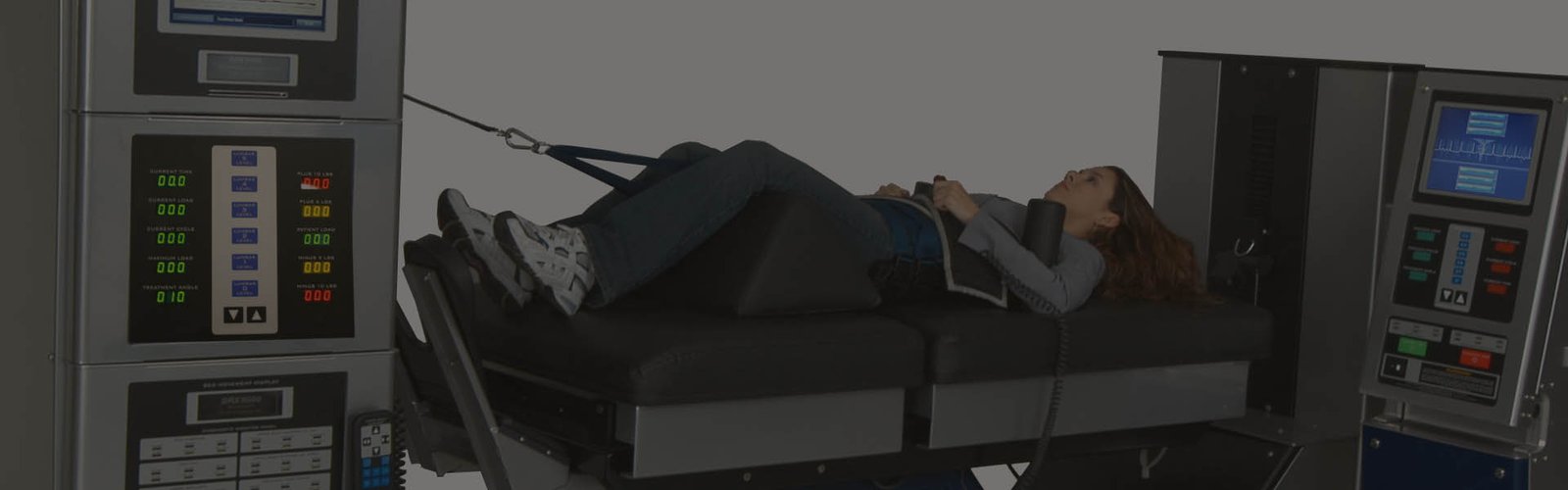
If your doctor has mentioned spinal decompression, or you've been researching non-surgical options for a disc problem, you probably have two questions: what actually happens during a session, and does it hurt? Here's an honest walkthrough of what decompression therapy looks like at our Tampa clinic, from the first evaluation to the last visit.
What spinal decompression is
Non-surgical spinal decompression is a motorized, computer-controlled form of traction designed to gently stretch the spine and reduce pressure within the discs. At Physical Medicine Health Center we use the DRX9000, a purpose-built decompression system that targets a specific spinal level rather than pulling on the whole back at once. It's one of several non-surgical options on our services page, and it's most often used for disc-related problems: herniations, bulges, and degenerative disc changes that haven't responded to other care.
How it works
The system applies gentle, cyclical traction. It pulls, eases off, and pulls again in a slow, computer-monitored rhythm. That cycling matters. A steady, continuous pull tends to trigger muscle guarding: your back senses the stretch and tightens up to resist it, which defeats the purpose. The DRX9000's gradual on-and-off pattern is designed to work beneath that reflex, allowing the targeted disc space to open slightly. Reducing pressure within the disc may help draw bulging material away from irritated nerves and improve the movement of fluid and nutrients into the disc.
If you're dealing with leg pain from a disc, our post on herniated disc and sciatica recovery explains how decompression fits into a broader conservative-care plan.
What a session feels like
You stay fully clothed. We fit you with a support harness around your pelvis and torso, then position you comfortably on the table. For most lumbar patients, that means lying on your back with knees supported. The doctor enters your treatment parameters, and the table begins its slow traction cycles.
Most patients describe the sensation as a gentle, rhythmic stretch, noticeable but not painful. In fact, many people relax completely, and it's common for patients to doze off partway through. A typical session runs about 30 minutes, and you can get up and go about your day afterward. Some people feel mild muscle fatigue after early sessions, similar to starting a new stretching routine; that generally settles as your body adapts. If anything ever feels wrong during a session, the system has a patient-held safety switch that stops treatment immediately.
Decompression is one tool, not the whole toolbox. Most patients combine it with chiropractic care, soft-tissue work, and guided activity changes for better overall results. See everything we offer under one roof on our services page.
How long a treatment plan runs
Decompression is cumulative. A single session won't resolve a disc problem, in the same way a single workout won't build strength. Most plans run several weeks, with sessions scheduled multiple times per week early on and tapering as you improve. Your exact plan is set after your evaluation, based on your diagnosis, the severity of your symptoms, and how long you've had them. We re-check your progress along the way and adjust the plan rather than running it on autopilot.
Are you a candidate?
Decompression can help many disc-related conditions, but it isn't right for everyone. Certain situations call for a different approach, including pregnancy, spinal instability, fractures, severe osteoporosis, some prior spinal surgeries with hardware, and certain other medical conditions. That's why every decompression patient starts with a thorough evaluation: history, examination, in-house X-rays when indicated, and a review of any prior imaging.
And here's our standing promise: if the exam shows you're not a good fit for decompression, we'll tell you that plainly and point you toward what we think will actually help, even if it isn't something we offer. If you're weighing your options, call us at 813-978-0020 and we'll help you figure out whether an evaluation makes sense.
Key takeaway: Spinal decompression is a comfortable, non-surgical, computer-controlled treatment: about 30 relaxed minutes per session over several weeks. Candidacy is determined by a real evaluation first, and we'll tell you honestly if it's not the right fit for your condition.